Watercolor Desert Cactus Clipart 19 PNGs: A Designer’s Review for Branding and Visual Projects
First Impressions: Soft, Earthy, and Visually Grounded
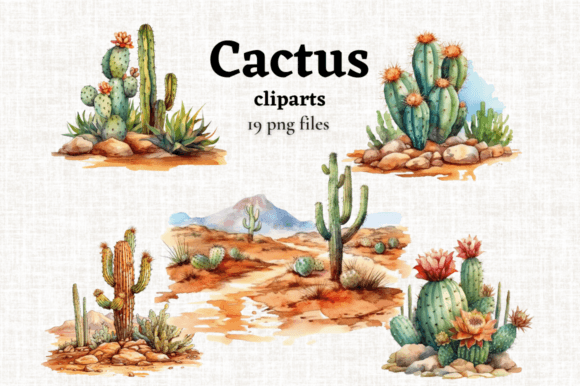
As a designer who frequently works with small businesses and handmade brands, the Watercolor Desert Cactus Clipart 19 PNGs immediately caught my eye with its soft, organic aesthetic. The hand-painted textures and muted color palette give it a natural, artisanal feel—perfect for projects aiming to convey warmth, simplicity, and a connection to nature. It’s not overly stylized, which makes it versatile, yet it carries enough character to stand out in visual storytelling.
Visual Mood and Style: Earthy Minimalism with a Handmade Touch
The clipart set leans into a modern rustic vibe, blending desert motifs with a watercolor finish. It evokes a sense of calm, grounded energy—ideal for wellness brands, botanical products, or indie fashion labels. The illustrations feel organic and approachable, avoiding the sterile look of digital graphics. This makes them especially effective for brands that want to feel personal and authentic without veering into overly crafty territory.
Real-World Design Applications: From Packaging to Social Media
When evaluating Watercolor Desert Cactus Clipart 19 PNGs for client work, I considered how it would perform across various design formats. Here’s how it holds up:
- Logo design – Not ideal as a primary logo mark, but works beautifully as a supporting icon or background texture for lifestyle or botanical brands.
- Brand identity – Perfect for adding warmth and personality to brand collateral, especially when paired with clean typography and soft color schemes.
- Product labels and packaging design – The desert cactus theme works well for natural skincare, herbal teas, or artisanal foods with a Southwest or desert-inspired branding angle.
- Printable designs and Canva templates – These PNGs are great for downloadable planners, wall art, or social media templates aimed at a female audience or eco-conscious brands.
- Cricut and sublimation projects – The clear outlines and transparent backgrounds make them easy to cut and layer onto physical products like mugs, tote bags, and stickers.
- Social media graphics and Pinterest pins – Their organic look helps content stand out in a sea of overly polished visuals, especially for DIY, lifestyle, or home decor accounts.
Where It Shines: Hero Graphics and Thematic Collections
These illustrations are most effective when used as hero graphics on landing pages or in product mockups. They also work well in themed collections—such as seasonal campaigns or curated product bundles. I found them particularly useful for printable wall art and packaging accents, where a soft, decorative touch is needed without overwhelming the design.
Where to Use Caution: Clarity and Context Matter
While the watercolor textures add charm, they can become problematic in small sizes or on complex backgrounds. The subtle strokes may get lost or muddy the visual hierarchy. For minimalist branding or corporate design, where clarity and precision are key, this set might feel too loose or informal. It’s best to avoid using it in environments where high contrast or clean visual structure is essential.
Typography Pairing: Balance the Organic with Structure
To maintain a professional look, I tested the Watercolor Desert Cactus Clipart 19 PNGs with various fonts. It pairs beautifully with handwritten and script fonts for a cohesive handmade feel. However, for more structured branding or packaging, a sans-serif like Montserrat or Lato provides a modern counterbalance. Avoid heavy display fonts that might compete with the softness of the illustrations.
Design Performance: Readability, Hierarchy, and Brand Consistency
In terms of readability, the clipart works best when used as a supporting element rather than the main focus. It enhances the emotional appeal and audience engagement of a design without overshadowing the message. However, because of its textured nature, it can interfere with visual hierarchy if placed behind text or icons. I recommend using it in areas with ample white space or as a background layer beneath semi-transparent overlays.
Practical Designer Notes: Test, Preview, and Verify
Before finalizing any client project, I always run a few checks:
- Test in black and white – These illustrations convert well to monochrome, though some detail may be lost depending on the original color depth.
- Check contrast on light and dark backgrounds – Some PNGs may require a drop shadow or border to prevent blending into darker tones.
- Preview at small and large sizes – As mentioned, detail diminishes at smaller scales, so test on mobile and print formats.
- Place on real mockups – Use mockups for packaging, apparel, and digital screens to see how the clipart integrates into the final product.
- Test print quality – Ensure resolution is high enough for physical printing, especially for print-on-demand or Etsy product use.
- Review file formats – Confirm PNG transparency and, if SVG files are included, test their editability in Adobe Illustrator or other vector tools.
- Confirm commercial licensing – Make sure the asset is cleared for commercial design and client use, especially for digital product resale or brand identity applications.
Final Thoughts: A Versatile Asset for Organic, Nature-Inspired Design
The Watercolor Desert Cactus Clipart 19 PNGs is a solid choice for designers working on creative design projects that lean into nature, sustainability, or artisanal aesthetics. Whether you're crafting a handmade business brand or developing a seasonal campaign, this set offers a flexible, visually engaging solution. Just be mindful of its limitations in high-contrast or minimalist environments, and always test thoroughly before final delivery.