Mushroom Forest Watercolor Clipart Review
As a designer who spends more time behind an embroidery machine than a computer screen, I approach digital assets with a healthy dose of skepticism. Beautiful screen art does not always translate to beautiful stitching. When I first opened the Mushroom Forest Watercolor Clipart collection, my immediate thought was not about how pretty it looked on my monitor, but how those soft, blended watercolor edges would behave under a needle. For fellow Etsy sellers, apparel decorators, and makers, this review breaks down the practical reality of turning these Illustrations into tangible, sellable goods.
Translating Soft Art to Structured Stitches
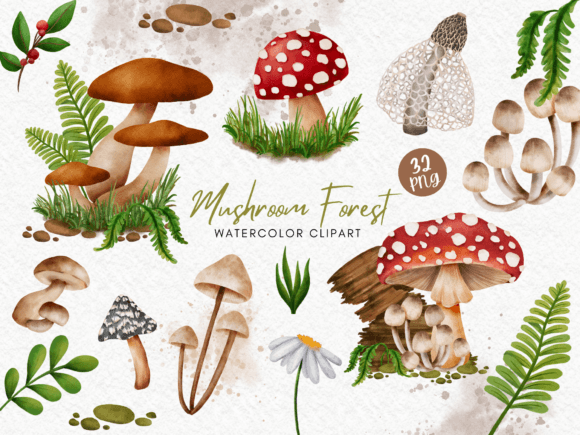
The visual personality of this Mushroom Forest Watercolor Clipart is undeniably whimsical. It evokes a cottagecore aesthetic that is currently dominating the handmade market. However, watercolor presents a unique challenge for machine embroidery design. Unlike vector art with hard lines, watercolor relies on gradients and transparency. In a real-world embroidery project, you cannot stitch transparency. You have to simulate it through thread color blending and stitch density.
My first impression was that these designs possess excellent shape definition. The mushrooms are distinct, which is crucial. If the silhouettes were too muddy, the final embroidered patch or sweatshirt embroidery would look like a blob from a distance. The layout feels organic rather than rigid, making it ideal for free-form placement on custom apparel or nursery decor. For a crafter, this means the design assets offer enough flexibility to be used as a centerpiece or scattered as decorative accents without losing their charm.
Real-World Application: The Custom Tote Bag Test
To truly evaluate this clipart, I mentally prototyped a specific product: a natural canvas tote bag for a boutique client targeting nature enthusiasts. Tote bags are high-traffic items; they get washed, crumpled, and loaded with heavy groceries. A delicate watercolor style needs to hold up to that wear.
For this tote bag design, the Mushroom Forest Watercolor Clipart works best when treated as an applique design foundation rather than a direct-to-garment print simulation. Trying to replicate every watercolor wash with fill stitch alone results in excessive stitch counts and stiff fabric. Instead, I envision using the clipart as a guide for placing textured fabrics, securing them with satin stitch borders, and adding running stitch details for the stems and gills. This hybrid approach maintains the artistic mood while ensuring the finished product remains durable and flexible. Customers appreciate a handmade product that feels substantial, not bulletproof.
Navigating Fabric Choices and Stabilizer Needs
Where you place this design matters as much as how you digitize it. Watercolor aesthetics rely on light and shadow, which can disappear on dark fabrics unless you use a white underlay base. This adds density. Therefore, I recommend reserving the full-color versions of this clipart for light-colored garments like cream sweatshirts, baby clothes, or tea towels.
If you are working with stretchy knits for baby embroidery or holiday embroidery on apparel, stabilizer choice is non-negotiable. The organic shapes in this forest theme often lack a continuous structural border. On jersey knit, this can cause puckering between isolated mushroom elements. Always test on scrap fabric first. I prefer a cut-away stabilizer for knits to maintain registration, whereas woven cottons for kitchen towels might only need tear-away. Remember, the goal is for the embroidery file to enhance the fabric texture, not overpower it.
Critical Watch-Outs for Small Hoop Sizes
While the overall composition is lovely, caution is required when resizing for small hoop sizes or detailed corners. Watercolor clipart often includes fine splatters or faint background washes. When scaled down for a cap, pocket logo, or sleeve cuff, these nuances become impossible to stitch cleanly. They turn into thread nests or get lost entirely.
For small-scale commercial embroidery projects, strip back the design to its core elements. Focus on the primary mushroom caps and major foliage. Avoid tiny lettering integrated into the watercolor wash; it rarely digitizes well at small scales. If your machine embroidery design software allows, separate the layers so you can delete non-essential artistic noise before generating the digital embroidery file. Your customers will value clarity over complexity in miniature formats.
Commercial Viability and Customer Perception
For Etsy sellers and small shop owners, the question isn't just "can I stitch this?" but "will this sell?" The Mushroom Forest Watercolor Clipart taps into a proven niche. Nature-inspired themes have high giftability and recognition. However, professionalism separates hobbyists from viable businesses. Using this clipart effectively signals to buyers that you understand current trends but also respect quality construction.
When creating printable mockups for your listings, ensure the digital preview matches what the physical item will actually look like. Do not simply paste the high-resolution PNG onto a shirt template if your stitched version simplifies the colors. Misrepresenting the level of detail leads to returns and erodes trust. Use the clipart to create accurate design previews that reflect the actual stitch-out. This honesty builds brand consistency and buyer engagement.
- Check Licensing: Before listing any finished product or selling the digital embroidery file itself, confirm the specific license terms included with the clipart. Commercial use rights vary significantly between designers.
- Thread Color Contrast: Watercolor blends can look flat in thread. Test high-contrast thread colors to define edges that might otherwise blend into the fabric background.
- Density Management: Review stitch density settings carefully. Overly dense fill stitch areas meant to mimic paint can cause needle breaks or fabric distortion.
- Mockup Testing: Create black and white mockups to check value contrast. If the design looks gray and indistinct without color, it needs better structural definition.
Final Verdict for Makers and Designers
The Mushroom Forest Watercolor Clipart is a versatile asset for the creative entrepreneur, provided it is approached with technical mindfulness. It excels in projects where mood and atmosphere are paramount, such as personalized gifts, nursery decor, and boutique branding. Its strength lies in its adaptability; it serves equally well as a guide for complex multi-media textile art or as a simplified motif for everyday custom apparel.
Success with this collection depends on respecting the limitations of thread. Embrace the watercolor aesthetic but interpret it through the language of embroidery. Prioritize clean satin stitches, strategic applique, and appropriate stabilizer over pixel-perfect replication. When executed with this level of care, these Illustrations transform from digital files into heirloom-quality embroidered pieces that justify premium pricing and delight end-users. Always verify file compatibility and license scope before beginning your next production run, and let your craftsmanship elevate the source material.