Father and Baby Lion Watercolor Clipart Review
When evaluating digital assets for embroidery, the transition from screen to stitch is where the real test begins. As a designer who regularly creates custom apparel and nursery goods for clients, I approach every new graphic with a critical eye toward production viability. The Father and Baby Lion Watercolor Clipart immediately stands out as a strong contender for sentimental projects, but its watercolor aesthetic requires specific technical considerations before it can become a successful machine embroidery design. This review breaks down how this illustration performs when adapted for tangible handmade products, focusing on practical application rather than just visual appeal.
Translating Soft Aesthetics to Stitch Logic
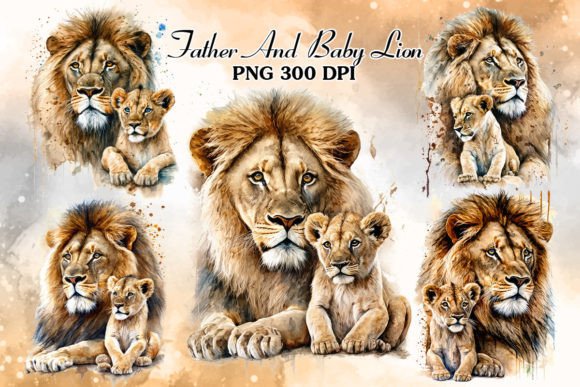
My first impression of the Father and Baby Lion Watercolor Clipart is that it captures a tender, protective mood perfectly suited for family-centric merchandise. The soft edges and blended tones typical of watercolor illustrations create an emotional connection that rigid vector art often lacks. However, for an embroidery project, softness is a double-edged sword. Watercolor gradients do not translate directly to thread; they must be interpreted through fill stitch density and color blending techniques.
Visually, the composition suggests a centered layout that would work beautifully as a chest placement on a sweatshirt or a focal point on a tote bag design. The interaction between the two figures provides a natural frame, which is helpful when digitizing because it creates defined boundaries for satin stitch borders or running stitch outlines. Unlike complex scenic illustrations, this clipart focuses on character emotion, making it ideal for personalized gifts where the sentiment matters more than intricate background details. For Etsy sellers and boutique owners, this specific mood aligns perfectly with current trends in gender-neutral nursery decor and fatherhood appreciation gifts.
Real-World Application: The Custom Sweatshirt Test
To truly judge this asset, I mentally walked through a recent client request: a matching father-and-son sweatshirt set for a holiday photo shoot. The client wanted something vintage-inspired but soft. The Father and Baby Lion Watercolor Clipart fits this brief exceptionally well, but only if the digitization respects the fabric's behavior.
On a fleece sweatshirt, the texture of the fabric will compete with the delicate nature of the watercolor style. If I were using this embroidery file for such a project, I would advise increasing the underlay to prevent the stitches from sinking into the pile. The design’s organic shapes allow for creative applique design integration, perhaps using a minky or cotton fabric for the lion bodies to reduce stitch count while maintaining the soft visual weight. This hybrid approach preserves the watercolor feel without creating a bulletproof patch of dense thread that could distort the garment. For a tote bag design on canvas, however, the full stitch-out would shine, as the tighter weave supports higher detail and smoother color transitions.
Navigating Fabric Limitations and Hoop Constraints
While the artistic quality is high, practical execution demands caution regarding where you place this design. Not all fabrics are friends with watercolor-style embroidery. I would hesitate to use this design on highly stretchy performance wear or thin jersey knits without significant stabilization. The varying stitch densities required to mimic watercolor shading can cause puckering on unstable fabrics, ruining the professional finish of a custom apparel piece.
Hoop size is another critical factor. The Father and Baby Lion Watercolor Clipart likely contains subtle details in the facial expressions and mane texture. Compressing this design into a small 4x4 hoop risks losing those defining characteristics. Tiny lettering or fine whiskers may turn into indistinguishable blobs if scaled down too aggressively. Always check the minimum recommended size in your digital embroidery file documentation. If you must stitch on a curved surface like a cap, verify that the design’s vertical height does not exceed your machine’s cap frame limits, as the top of the lion’s head could get distorted near the seam.
Dark fabrics also present a challenge. Watercolor art relies on light passing through layers of pigment. On black or navy fabric, you lose that luminosity unless you stitch a white base layer first. This adds significant stitch density and production time. For commercial embroidery businesses running high-volume orders, this might impact profitability. In such cases, testing the design on both light and dark backgrounds via printable mockup software is essential before committing to physical samples.
Ensuring Professional Quality and Customer Trust
For small shop product lines and craft business owners, consistency is key to building buyer engagement. A design that looks stunning on a computer screen but stitches out poorly on a finished product will damage your reputation. When utilizing the Father and Baby Lion Watercolor Clipart, pay close attention to thread colors. Standard polyester threads have a high sheen that can sometimes clash with the matte, organic look of watercolor art. Consider using matte-finish threads or adjusting your digitizing parameters to include more random stitch angles, which diffuses light reflection and mimics painted brushstrokes.
Furthermore, consider the end-use care instructions. If this design is intended for baby embroidery on bibs or blankets, it must withstand frequent washing. Ensure that any decorative accents or loose running stitches are secured properly to prevent snagging. A beautiful design that falls apart after three wash cycles is not a viable commercial product. Reviewing stitch density maps before stitching helps identify weak points where thread breaks or pull-outs might occur.
Designer Notes for Safe Implementation
Before adding this illustration to your inventory of design assets or listing a new handmade product, follow these practical steps to ensure success:
- Test on Scrap Fabric First: Never assume a digital preview equals reality. Stitch the Father and Baby Lion Watercolor Clipart on the exact fabric type you intend to sell. Check for registration issues between color blocks.
- Verify Licensing Terms: Confirm whether your purchase includes rights for commercial embroidery or just personal use. Some licenses restrict selling digital embroidery files while allowing finished physical products. Protect your business by reading the fine print.
- Evaluate Stabilizer Pairings: Match your stabilizer to the fabric weight. Use cut-away stabilizer for stretchy garments to maintain the integrity of the watercolor shading over time, and tear-away for stable woven items like tea towels.
- Check Contrast and Legibility: Print a black and white version of the design to see if the values hold up without color. If the father and baby lions blend together in grayscale, you may need to adjust thread contrast during digitization.
- Create Accurate Mockups: When listing on Etsy or your own site, use realistic printable mockup templates that show the texture of the embroidery. Customers trust listings that demonstrate how the Father and Baby Lion Watercolor Clipart actually looks on a wrinkled sweatshirt or draped blanket rather than a flat digital render.
Ultimately, the Father and Baby Lion Watercolor Clipart offers immense potential for creating heartfelt, high-value items. Its strength lies in its emotional resonance, making it a versatile choice for everything from holiday embroidery to everyday nursery decor. By approaching the design with technical mindfulness and respecting the limitations of thread and fabric, makers can transform this beautiful illustration into heirloom-quality goods that customers will cherish. Whether you are a hobbyist exploring new styles or an established apparel decorator expanding your catalog, this asset serves as a reminder that successful embroidery is always a marriage of art and engineering.